Who Sold What to Whom?
What the record shows about American oil, machines, patents and subsidiaries in Germany, Japan and the Soviet Union, and who acted: governments, companies, or neither
A popular version says the U.S. “sponsored” the Nazis, Japan and the Soviets. This story treats that as a claim to test, not a fact.
The test is two questions. Who acted: the U.S. government, or a company? And when: before the U.S. entered the war in December 1941, or after? Each scene says which, gives each side of a dispute its say, and shows Antony Sutton’s thesis as his account, with what a historian found beside it. Some scenes cover only part of a deal, and some sources are a company’s or an author’s own account; the story says so.
1976
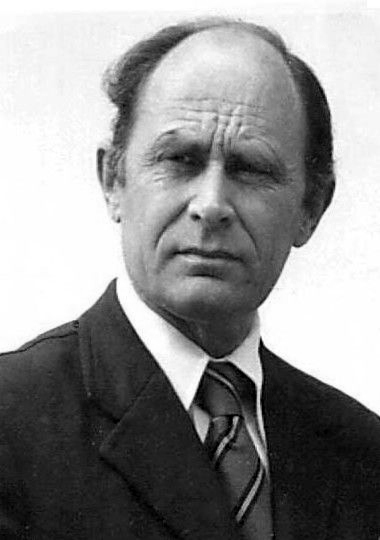
The claim to test. A popular version says the U.S. “sponsored” the Nazis, Japan and the Soviets. One much-cited source is Antony Sutton, a former Hoover Institution research fellow, whose 1976 book blames financiers who work “far behind and above” elected politicians, not the U.S. government as such. The test here is plain: who acted, the U.S. government or a company, and did it happen before the U.S. entered the war in December 1941 or after? Each scene says which.

24 Jul 1941
Oil for Japan. The U.S. government was “permitting oil to be exported” to Japan; who sold it is not named in the papers used here. A State Department history says the U.S. was the main supplier of oil, steel and iron to the Japanese military. On 24 July 1941 Roosevelt told a volunteer defense committee why: cut the oil off, and Japan would probably turn on the Dutch East Indies, “and you would have had war.” This was the policy of a country still at peace.

8 Oct 1940
Scrap iron. In October 1940 the U.S. government stopped scrap iron and steel going to every country except Britain and the Western Hemisphere. Japan’s ambassador protested, and Secretary of State Cordell Hull answered that only “at the height of our national defense preparations” was the U.S. “imposing a few embargoes on important commodities.” Months earlier Hull had said the U.S. was “progressively bringing economic pressure to bear on Japan.” Oil was still allowed.

28 Aug 1941
The freeze. After Japan moved into Indochina, Roosevelt froze Japanese assets in the U.S. on 26 July 1941. Japan’s ambassador had warned that restricting oil “would undoubtedly inflame Japanese public opinion exceedingly.” A State Department history lists a full embargo and the freeze together, while Hull’s memorandum of 28 August has Roosevelt speaking of the “oil quota allowed Japan.” The papers used here do not settle how much oil still moved.

8 May 1929
Detroit to Moscow. In 1929 the U.S. did not recognize the Soviet government, so Americans working there had no official protection. Amtorg, the Soviet trading agency in New York, hired Albert Kahn’s Detroit firm in May 1929 to design the first Soviet tractor plant, at Stalingrad, and in January 1930 as consulting architects for Soviet industry. Ford Motor Company also signed with the Soviet government in 1929, to help open plants at Nizhny Novgorod and Moscow; the Henry Ford museum says it lost money. These were company contracts, signed years before Hitler’s government of 1933 and twelve years before the U.S. went to war.

1931
What the plants were for. A scholar of Kahn’s work writes that the Soviet planners’ ultimate goal was to make the tractor industry “most immediately convertible into military purposes,” and that in 1931 they set wartime tankette quotas for the Nizhny Novgorod car works at 20 to 25 percent of capacity. No source here says Kahn’s firm designed anything for tanks: between 1929 and 1932 it designed the Stalingrad and Chelyabinsk tractor plants and truck-assembly plants. The same scholar writes that this work helped build Soviet defenses that played “an important role in the Allies’ defeat of Nazi Germany.”

24 Apr 1974
Sutton’s reading. According to Antony Sutton, Western technology built Soviet industry, military industry included. His method, he told a House subcommittee in 1974, was to take “each major process or technology” and “determine its origins”; his main series came from the Hoover Institution. The Kahn and Ford contracts are real and documented. Whether they amount to backing a regime is his interpretation.
Oct 1941
Lend-Lease. Lend-Lease was not a sale. It was a law, debated in public, that let the U.S. lend or lease war supplies to any nation deemed vital to its defense. Roosevelt had put a “moral embargo” on some exports to the Soviets, yet “never lost sight of the fact that Nazi Germany, not the Soviet Union, posed the greatest threat.” After Germany invaded in June 1941, his aide Harry Hopkins met Stalin twice and urged help, and by the end of October the first aid was on its way; the U.S. entered the war in December and then dealt with the Soviets as allies.

Dec 1941
The line: December 1941. Until it declared war on Germany in December 1941 the U.S. was at peace with it: a Ford spokesman later defended the company’s German ties because the U.S. kept diplomatic relations with Berlin until Pearl Harbor. After the declaration it was illegal for U.S. motor companies to have any contact with their subsidiaries in German-controlled territory. Standard Oil’s German agreements date from 1929 and General Motors bought Opel in the 1920s, both before Hitler’s government. Each German scene below says which side of the line it is on.

9 Nov 1929
Oil and chemistry. On 9 November 1929 Standard Oil of New Jersey signed agreements with Germany’s I. G. Farben. Each got a field of its own and shared patents: chemicals, rubber among them, to the Germans; oil, synthetic gasoline among it, to the Americans. Thurman Arnold of the Justice Department told the Senate in 1942 that the arrangements were “the principal cause of the present shortage of synthetic rubber.” He also said they were not made “with any desire to help Germany” but to win a protected market and “eliminate independent competition.”
Jun 1941
Standard, 1939 to 1941. After war began in Europe, Standard and I. G. Farben made a new arrangement at The Hague in 1939. Arnold called the Hague memorandum “a device for the continuation of the conspiracy”; the company’s president, W. S. Farish, called it “reasonable and expedient.” Farish confirmed that Standard’s German subsidiary planned a Hamburg aviation-gasoline plant in 1938 or 1939, in a country “with which country we were not then at war,” and denied shipping fuel to Italian and German air lines in Brazil against the State Department’s wishes. On 1 June 1942 Arnold wrote that he did not believe Standard had told the committee the truth about the cartel.

27 Mar 1942
The plea. On 25 March 1942 the Justice Department filed a criminal charge under the Sherman Act, the antitrust law, against Standard Oil of New Jersey, six subsidiaries and three officers, W. S. Farish among them. The ten defendants pleaded nolo contendere, a plea that does not contest the charge, and paid $5,000 each, $50,000 in all. The company said it disagreed with the charge and that its war work was “more important than court vindication.” Senator Truman asked why the fines were so small; Arnold said “getting these patents loose” mattered more than a long court fight.
15 May 1942
Cologne. Ford owned most of Ford-Werke, its German factory in Cologne, from before the war. Ford’s own report says that, to meet government demands, Ford-Werke assembled U.S.-built trucks in late 1938, and that they were used in the invasion of Czechoslovakia. The last American or British board member attended in April 1938. On 15 May 1942, after the U.S. was at war, the Nazi government, by court order, declared the plant enemy property and appointed a custodian.
5 Sep 1945
Two readings. Ford’s report dates prisoner-of-war labor at Ford-Werke from September 1940, yet Ford’s expert says communication with Cologne “ceased by November of 1941, before the use of forced or slave labor began.” The Washington Post reported signs of indirect contact after 1941, including a visit by the plant’s Nazi custodian to Portugal in 1943, and a Treasury inquiry that ended without charges. An Army investigator wrote in 1945 that the German branch was “an arsenal of Nazism, at least for military vehicles”; in 1998 a Ford spokesman called that “a mischaracterization.” Ford denies responsibility, says its records show little wartime profit, and paid $13 million into a German fund for forced laborers; a 1998 suit was dismissed in 1999 as filed too late.
Mar 1940
Rüsselsheim. General Motors bought Opel in the 1920s and held it through the war. Its director James Mooney talked with Hitler in Berlin two weeks after Germany invaded Poland, the Washington Post reported, and an FBI report of July 1941 quotes him refusing to “make Hitler mad.” GM said in 1998 that it lost day-to-day control in September 1939, but German records show it gave an American manager a power of attorney in March 1940, and its spokesman declined to answer questions on that. A Yale historian’s book, based on unrestricted access to GM’s records, is described by its publisher as showing that GM executives “thwarted a sustained Nazi effort to gain control of Opel” and as assessing GM’s implication in the war effort and in forced labor.

Feb 2001
Punched cards. IBM bought Dehomag, its German punched-card firm, after the First World War; it supplied machines for Germany’s censuses, and by 1936 it was German-owned “on paper.” Edwin Black’s 2001 book charges IBM and its president, Thomas Watson, with a “strategic business alliance” with the Reich through the war. IBM’s statement of 14 February 2001 calls the Nazi atrocities “abhorrent,” says Dehomag “came under the control of Nazi authorities,” and says most documents were destroyed or lost; in 2002 it called the charge that it withholds archives baseless. A review in American Heritage found “no smoking gun anywhere for Watson’s or any American’s witting involvement in Nazi crimes,” but also that IBM “did nothing to circumscribe Dehomag’s operations” and that Watson accepted a medal from Hitler, which he later returned.

Oct 1942
Vesting Order 248. In October 1942, under the Trading with the Enemy Act, the Alien Property Custodian took the stock of Union Banking Corporation, a New York bank owned by a Dutch bank in the Thyssen family’s business empire. The Associated Press reported in 2003 that all 4,000 shares were registered in the names of seven directors: 3,991 in E. Roland Harriman’s name and one in Prescott Bush’s. AP wrote that the documents “do not show any evidence Bush directly aided” Fritz Thyssen’s support for Hitler. No charges were brought; a professor told AP the government was “too busy trying to fight the war,” and Bush’s spokesman declined to comment.
1976
Whose money. Sutton calls Union Banking “a joint Thyssen-Harriman operation,” argues the Harrimans knew of Thyssen’s support for the Nazis, and writes that the tie “does not suggest that the Harrimans directly financed Hitler.” The Yale historian Henry Ashby Turner never mentions Sutton or this bank. His study finds that Fritz Thyssen probably helped the Nazis in 1923 and later countersigned a Dutch bank’s loan to the Nazi party of 200,000 to 400,000 marks; it does not say whose bank that was. AP adds that Thyssen broke with the Nazis in 1938 and was in a Nazi prison from 1941 to 1945.

Jul 1944
Project Safehaven. The U.S. froze German assets in the U.S. on 14 June 1941, before it was at war, and seized some from 1942. Safehaven, launched at the Bretton Woods conference in July 1944 and run jointly by the State Department, the Treasury and the Foreign Economic Administration, went after German assets abroad “to prevent any Nazi resurgence after the War.” A 1997 State Department study says it achieved “some success in preventing the diversion of Nazi assets abroad,” and also that its report “raises serious questions about the U.S. role.”

2 Sep 1945
Sorting it out. On Germany, none of the sources used here shows the U.S. government paying for or arming it: they show company deals before and during the war, an antitrust plea, an Army investigator’s accusation that Ford disputes, and government freezes and seizures. On Japan, the government allowed oil sales until 1941 and said why. On the Soviet Union, companies sold designs and plants in 1929–1932, and the government sent aid as an ally only after Germany invaded. What stays only alleged is that Wall Street or the U.S. “sponsored” Hitler, which Sutton’s own book says its Harriman evidence does not suggest.
Pictures, from Wikimedia Commons: Antony C. Sutton, Claritablue, CC BY-SA 3.0; Japan, Jeff Schmaltz, MODIS Rapid Response Team, NASA/GSFC, Public domain; Franklin D. Roosevelt, Leon Perskie, CC BY 2.0; United States government, Martin Falbisoner, CC BY-SA 3.0; Moscow, U.S. Department of State, Public domain; Joseph Stalin, Ivan Shagin, Public domain; Stanford University, King of Hearts, CC BY-SA 3.0; Germany, dronepicr, CC BY 2.0; Standard Oil, Unknown, Public domain; U.S. Department of Justice, APK, CC BY 4.0; IBM, Clockready, CC BY-SA 3.0; New York City, Fred Hsu on en.wikipedia, CC BY-SA 4.0; U.S. Treasury, 颐园居, CC BY-SA 4.0; Surrender of Japan, Cross W G (Sub Lt), Royal Navy official photographer, Public domain.


Something wrong or missing? Tell us, with a source, or edit this page.