The Crash of 2008
How home loans became bonds, the bonds brought down banks, and a commission could not agree on why
American home prices peaked in 2006. Two years later Lehman Brothers was bankrupt and Congress was voting on $700 billion.
Nearly every line here comes from the Financial Crisis Inquiry Report, the court examiner’s report on Lehman, and the Federal Reserve’s and Treasury’s own words. A charge is an accusation, not a finding of guilt: where a case ended, the story says how. The commission could not agree on why it happened, so the majority and those who dissented each get their say.
2003
A loan becomes a bond. A lender makes a home loan and sells it. The loan goes into a pool with many others, so a few defaults hardly matter. The pool is cut into slices and sold to investors. Everyone along the way earns a fee.

2006
The boom. In Sacramento, prices rose nearly two and a half times in five years. Subprime loans, made to borrowers with weaker credit, went from 8% of new mortgages in 2003 to 20% in 2005. Lenders pooled them and sold them to investors.
May 1998
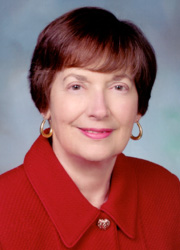
Ten years before. In May 1998 Brooksley Born’s agency said it was taking a new look at derivatives traded outside any exchange. Treasury Secretary Robert Rubin, Fed Chairman Alan Greenspan and SEC Chairman Arthur Levitt objected the same day, and asked Congress for a moratorium on what the agency could do.

23 Mar 2001
A governor’s warning. In 2001 Edward Gramlich spoke of “disquieting reports of abusive lending practices.” He and Sheila Bair considered seeking rules, but he thought the Fed “would not support the effort.” The commission’s majority later wrote: “there were warning signs. The tragedy was that they were ignored or discounted.”
2006
Triple-A. From 2000 to 2007 Moody’s rated nearly 45,000 mortgage securities triple-A, its top grade. Of those it rated so in 2006, it cut 73% to junk. “This crisis could not have happened without the rating agencies,” wrote the majority. Moody’s chief executive told the commission he saw no “particular difference in culture” after the firm was spun off.

Jan 2008
Flying blind. In January 2008 Bank of America said it would buy the ailing lender Countrywide. The next year the SEC charged its former chief executive, Angelo Mozilo, with securities fraud. A charge is an accusation, not a finding of guilt.

16 Mar 2008
Bear Stearns. High-risk loans went bad, and the bonds made from them fell. On Sunday 16 March 2008 Bear Stearns accepted an offer from JPMorgan Chase. The New York Fed helped arrange it, and the Federal Reserve approved the financing.

7 Sep 2008
Fannie and Freddie. Two government-sponsored companies stood behind $5.3 trillion of mortgage assets. On 7 September 2008 the government took them over. Treasury Secretary Henry Paulson blamed “the inherent conflict and flawed business model embedded in the GSE structure,” and the housing correction.

14 Sep 2008
The weekend. One week later, talks ran through the weekend over Lehman Brothers. At 8:00 on Sunday morning, Barclays told Paulson that the British regulator had declined to approve its deal. Lehman filed for bankruptcy at 1:45 a.m. on Monday. That day the Dow fell more than 500 points.
2008
Repo 105. In an ordinary repo, a firm raises cash by selling assets it must buy back days later. The court’s examiner found that Lehman had not disclosed using one kind of repo to take about $50 billion off its balance sheet at the end of two quarters in 2008.

22 Sep 2008
Who got out. Merrill Lynch sold itself that same weekend. Barclays began talks on Lehman’s U.S. brokerage right after the filing, and closed the purchase on 22 September. Why no rescue? Bernanke said Lehman’s troubles “had been well known for some time.” John Thain told the commission: “There was a criticism of bailing out Wall Street.”

16 Sep 2008
AIG. AIG had insured other firms against losses on debt, much of it mortgage-related, through credit default swaps: $54 billion of the top slices in 2004 and 2005, up from $2 billion in 2003. A “disorderly failure of AIG,” the Fed said, could add to market fragility. So the day after Lehman, it lent.
3 Oct 2008
$700 billion. The Treasury asked for up to $700 billion to buy troubled assets. On 29 September the House said no, 228 to 205, and the Dow plunged 778 points. On 3 October it said yes, 263 to 171, and President Bush signed the law.

Oct 2009
What it cost. Unemployment went from 5 percent to 10. Home prices fell about 30 percent, and the S&P 500 fell 57 percent. The economy shed 3.6 million jobs in 2008, the largest annual plunge since record keeping began in 1940. Nearly $11 trillion in household wealth vanished, the commission wrote.

21 Aug 2014
How the cases ended. Mozilo paid $67.5 million to settle with the SEC in 2010, neither admitting nor denying the allegations. Goldman Sachs paid $550 million that year, also without admitting or denying them, and acknowledged that its marketing materials for one deal “contained incomplete information.” Bank of America’s settlement covered Countrywide and Merrill Lynch.

21 Jul 2010
The new law. The Dodd-Frank Act set out “to end ‘too big to fail’” and “to protect the American taxpayer by ending bailouts.” It put tougher rules on firms whose failure could threaten the system. Few congressional Republicans supported it.
Jan 2011
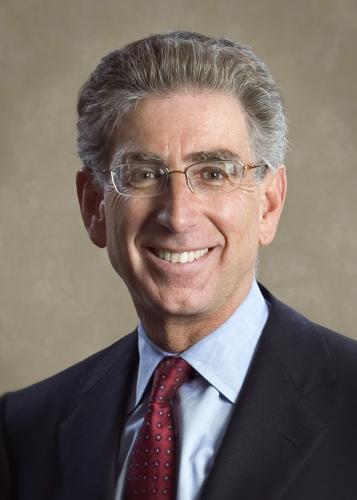
Why: the majority. A commission of ten was asked why it happened, and it could not agree. Six signed the report, among them Brooksley Born. They blamed failures in regulation and supervision, and “collapsing mortgage-lending standards.”
Jan 2011
Why: three who dissented. They put a credit bubble first. China, other developing countries and the oil producers built up surpluses, and “loaned these savings to the United States and Europe, causing interest rates to fall.” Neither the Community Reinvestment Act nor the end of Glass-Steagall, they wrote, “was a significant cause.”

Jan 2011
Why: one more. Peter Wallison filed alone. U.S. housing policy, he wrote, led to “27 million subprime and other risky loans — half of all mortgages in the United States.” So one commission gave three answers, and each is here in its own words.
Pictures, from Wikimedia Commons: Sacramento, Quintin Soloviev, CC BY 4.0; Brooksley Born, U.S. Government, Public domain; Edward Gramlich, Federalreserve, Public domain; Angelo Mozilo, Ron Bennett for the Department of Housing and Urban Development, Public domain; Bear Stearns, Unknown, CC BY-SA 2.0; Fannie Mae, User:AgnosticPreachersKid, CC BY-SA 3.0; Lehman Brothers, David Shankbone, CC BY-SA 3.0; Merrill Lynch, Hänsel und Gretel, CC BY-SA 3.0; American International Group, Marc Bryan-Brown, Public domain; United States, UN Office for the Coordination of Humanitarian Affairs (OCHA), CC BY 3.0; U.S. Securities and Exchange Commission, Don Ramey Logan, CC BY 4.0; Barack Obama, Official White House Photo by Pete Souza, Public domain; Phil Angelides, Financial Crisis Inquiry Commission, Public domain; Keith Hennessey, White House, Public domain; Peter J. Wallison, William Fitz-Patrick, Public domain.
Something wrong or missing? Tell us, with a source, or edit this page.


