The Sealed Train
How Lenin crossed wartime Germany with Berlin's leave, through Stockholm to the Finland Station, in the records of both sides
In April 1917 Russia was in revolution, Europe was at war, and Vladimir Lenin was stuck in Switzerland. He went home on a train that crossed Germany with Berlin’s leave.
The German Foreign Ministry’s telegrams were published in 1958, and Lenin, Krupskaya and others aboard wrote their own accounts. They do not always agree: on who arranged it, on what Berlin granted, on what each side wanted. Where they differ, each is given with its source, and the story does not pick one. Whether German money reached the Bolsheviks, and how much it mattered, is argued by historians; the scene on the files sets out their answers. Dates are in the modern calendar; the old Russian one ran thirteen days behind.

15 Mar 1917
News by the lake. In March 1917 Bronski burst in on Lenin and his wife, Nadezhda Krupskaya, with news of a revolution in Russia. Lenin was, she wrote, “all eagerness to go back.” But England and France, she knew, would never let a Bolshevik through, and his nights went on “the most improbable plans”.

1 Apr 1917
The same war. What kept Lenin in Switzerland was the war that began in the thirty-seven days of 1914, told in the story of that name. The Kaiser and Chancellor Bethmann Hollweg who backed Vienna in July 1914 still ruled in Berlin. Now their government held the key to Lenin’s way home.

19 Mar 1917
Only Lenin jumped at it. On 19 March the Russian exiles in Switzerland met. By Krupskaya’s account, Martov’s plan was to ask Germany for passage in exchange for interned German and Austrian prisoners, and Lenin alone seized on it. A decision Lenin signed on 31 March records that the Swiss socialist Robert Grimm negotiated with Hoffmann, a member of the Swiss government.

23 Mar 1917
Berlin is asked. On 23 March the Foreign Ministry’s State Secretary, Arthur Zimmermann, backed letting Russian revolutionaries cross Germany and asked the army’s High Command for its view. Two days later the High Command answered: no objection, if they went in a special train with a reliable escort. The telegram names no officer.

31 Mar 1917
Lenin’s party is named. On 30 March a captain in the General Staff’s Political Section passed on an agent’s report from Switzerland. It said bringing out Lenin’s party would be advantageous to Germany. At a General Staff meeting next day a memo records the doubt: “It seems very questionable whether we shall achieve our aims.”
4 Apr 1917
Platten’s paper. Fritz Platten, secretary of the Swiss Social Democratic party, set down nine conditions. One carriage with “extra-territorial rights”, no control of passports, passage whatever a traveller thought of the war, tickets at normal fares. In return the travellers would press in Russia for an exchange with interned Germans and Austrians.

7 Apr 1917
Berlin says yes, nearly. On 5 April Berlin told Bern that the General Staff agreed: the crossing at Gottmadingen, no passport checks, luggage sealed, safe transit, at most sixty people. Two days later it accepted Platten’s conditions except Clause 2, which made him the only contact, locked the carriage and gave it extra-territorial rights, because a German trade-union man, Janson, would ride along. Lenin’s own report still claims those rights; the records do not reconcile the two.

1919
The general writes afterwards. The 1917 telegrams name the army’s High Command, not Ludendorff, as raising no objection. Two years later Ludendorff, the army’s First Quartermaster General, wrote that “our Government” had sent Lenin, and that his journey “was justified” from a military point of view, “for Russia had to be laid low”. The editor of the German files, Z. A. B. Zeman, noted that Ludendorff referred to it with “bated breath”.

4 Apr 1917
What each side wanted. Berlin’s minister in Bern called the exiles’ quick departure “greatly in our interests”. The Bolshevik leaders in Switzerland judged the terms “fully acceptable” because they guaranteed passage whatever a traveller thought of the war. Krupskaya wrote that Berlin gave leave “in the belief that revolution was a disaster to a country”, while the Bolsheviks meant to bring one about anyway.

9 Apr 1917
Who was aboard. Krupskaya counted thirty, not counting a four-year-old boy named Robert. Lenin’s report to the Petrograd Soviet says thirty-two, nineteen of them Bolsheviks, and a German diplomat counted thirty-three arriving in Sweden. Besides Lenin and Krupskaya there were the Zinovievs, Grigori Sokolnikov, and Karl Radek, who went “under the guise of a Russian”. Fritz Platten rode with them.
9 Apr 1917
Two hours. When word came from Bern that Platten’s talks had succeeded, Lenin sprang up: “Let us catch the first train.” Krupskaya had two hours to pack and settle with the landlady. The party gathered at the People’s House in Bern and left on 9 April. Merridale’s account, as Kirkus Reviews summarises it, calls the journey one “from Zurich to Petrograd”.

10 Apr 1917
Across Germany. They crossed at the frontier station of Gottmadingen and went north to Sassnitz. In Berlin the carriage stood in a siding, and at the stations Krupskaya saw “the total absence of grown-up men”. Berlin’s records add milk for the children, and the Kaiser’s idea of handing the Russians the Chancellor’s speech.
13 Apr 1917
Stockholm. Sweden had said yes: “Government here permits transit through Sweden,” Berlin’s minister there wired on 10 April. Thirty-three exiles reached Malmö, where, by a German report, the Mayor of Stockholm welcomed them at Trelleborg. In Stockholm Swedish Social Democrat members of parliament met them, and a red flag hung in the waiting room.
13 Apr 1917
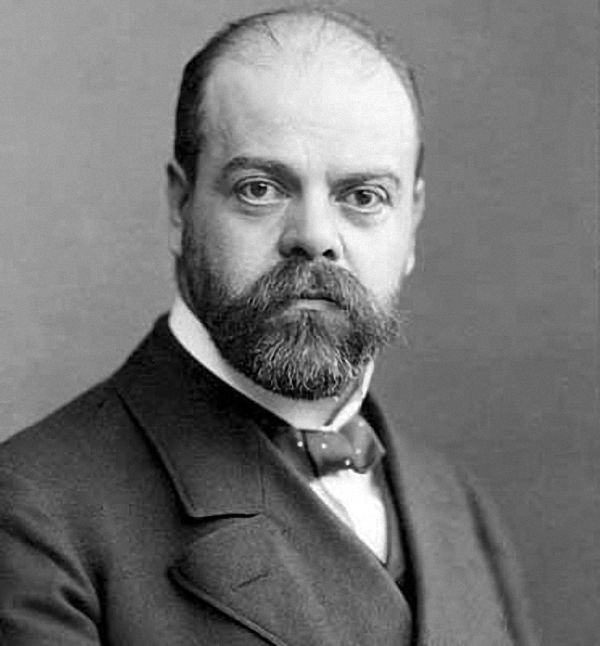
A man at the door. Alexander Parvus, to whom Berlin had authorised one million roubles in 1915, asked the German minister in Copenhagen to tell him when the Russians reached Malmö, because he wished to meet them. In Radek’s telling, Lenin refused to see him and had the attempt put on record. Zinoviev told comrades in Petrograd that Lenin likewise refused to meet the German Social Democrat Scheidemann.

15 Apr 1917
At the Russian frontier. The party crossed into Finland in country sleighs. Platten, who meant to go on to Petrograd, was stopped at the frontier; Berlin’s minister in Bern heard that a British officer cancelled his permit. Krupskaya says the Provisional Government refused Platten and Radek but “did not dare to stop the Bolsheviks”. Lenin, she remembered, asked whether they would be arrested on arrival.

16 Apr 1917
The Finland Station. Lenin reached Petrograd on the night of 16 April (3 April in the old Russian calendar). Sailors from Kronstadt formed a guard of honour, armoured cars waited outside, and Lenin spoke to the crowd from one of them. The naval officer Raskolnikov, who had met the train on the way, wrote that the idea of crossing Germany “had never entered our heads”.
17 Apr 1917
The April Theses. The next day Lenin read ten theses, first to Bolsheviks and then to a joint meeting with Mensheviks. No support for the Provisional Government; a republic of Soviets, not a parliamentary one; confiscation of all landed estates. Krupskaya wrote that his comrades were “somewhat taken aback”; Raskolnikov, a Bolshevik, that the speech “produced a complete revolution in the thinking of the Party’s leaders”.
5 Jul 1917
The charge. The train followed Lenin. On 4 July the Provisional Government’s Justice Minister authorised a press release saying Germany had sent Lenin to Russia and that money reached the Bolsheviks through Stockholm. Lenin and the Bolshevik leaders flatly denied it. Neither side was heard in court before the Bolsheviks took power in October.
3 Dec 1917
What the files show, and what they do not. Germany’s State Secretary Kühlmann wrote in December 1917 that the Bolsheviks had received “a steady flow of funds”. Z. A. B. Zeman, who published the files in 1958, found “no evidence” among them that Lenin was in direct contact with German agencies, and wrote that the two sides’ aims “coincided to a high degree”. Lyandres (1995) found the July charge unproven, yet noted that the files show substantial funds set aside for Bolshevik anti-war work in 1917. Kirkus Reviews, summarising Catherine Merridale (2017), says that to speak of “Germany” alone is “to speak too broadly”: one faction was willing to gamble on Lenin.

3 Mar 1918
What came of it. Less than seven months after the Finland Station the Bolsheviks took power. On 3 March 1918 Soviet Russia signed the Treaty of Brest-Litovsk; its delegate Grigori Sokolnikov had crossed Germany on the sealed train. According to Ludendorff, the peace eased the Eastern Front “to an extraordinary degree”. What followed, from the Union’s founding to its end in 1991, is the story The Rise and Fall of the Soviet Union.
Explore further: follow the road ahead in The Rise and Fall of the Soviet Union, or the road behind in Thirty-Seven Days.
Pictures, from Wikimedia Commons: February Revolution, Ivan Vladimirov, Public domain; First World War, User:Hohum, Public domain; Vladimir Lenin, Pavel Zhukov, Public domain; Berlin, Thomas Wolf, www.foto-tw.de, CC BY-SA 3.0; Bolsheviks, Boris Kustodiev, Public domain; Zurich, Ikiwaner, CC BY-SA 3.0; Erich Ludendorff, Alexander Binder, Public domain; Nadezhda Krupskaya, Maria Ulyanova, Public domain; Grigori Sokolnikov, Unknown authorUnknown author, Public domain; Wilhelm II, Studio of Thomas Heinrich Voigt, Public domain; Alexander Parvus, Unknown photographer, Public domain; Russian Provisional Government, Published by Russian Information Bureau, NY, 1918, Public domain; Saint Petersburg, Florstein (Telegram:WikiPhoto.Space), CC BY-SA 4.0; October Revolution, Pyotr Novitsky, Public domain.
Something wrong or missing? Tell us, with a source, or edit this page.


