Thirty-Seven Days
How two shots in Sarajevo became a war across Europe, in the telegrams of those who sent them
On 28 June 1914 two shots were fired in Sarajevo. Thirty-seven days later most of Europe was at war.
Nearly every line here comes from the documents the governments themselves published. Much of the German and Austrian record reaches this story through the English of the historian Sidney Fay, who took a side in the argument over blame; the story says so when it gets there. Who was to blame is still disputed, so each answer gets its say, and the story does not pick one. Dates are in the modern calendar.

28 Jun 1914
St. Vitus’ Day. On the morning of 28 June 1914 Archduke Franz Ferdinand, heir to the throne of Austria-Hungary, rode through Sarajevo in an open car. Nedeljko Čabrinović knocked the cap off a bomb and threw it. It bounced off the folded hood and wrecked the car behind.

28 Jun 1914
The wrong way. Later that morning the driver took the wrong street. He stopped to back up at the corner where a student, Gavrilo Princip, was standing. Princip “stepped forward and fired two shots point blank.” Count Harrach, on the running board, heard the Archduke say: “Sophie, Sophie, don’t die. Stay alive for the children!” Both died.

24 May 1914
Who sent them. Young Bosnia was “impatient with the politicians.” In Belgrade in May, by the Austrian court record, a Serbian major asked one of the plotters: “Are you the man? Are you determined?” The Serbian scholar Stanoje Stanojević wrote that Colonel Dragutin Dimitrijević, known as Apis, “took over and organized” the plot.

Jun 1914
What Belgrade knew. Sidney Fay read this to mean that ministers knew a month ahead and “took no effective measures.” R. W. Seton-Watson replied that the onus lay on Belgrade to show its information was vaguer than this, or that it had warned Vienna some other way. Fay found no official warning reached Vienna’s Foreign Office. The point is still disputed.

5 Jul 1914
Lunch at Potsdam. Vienna’s ambassador lunched with Kaiser Wilhelm II. By his report, the Kaiser would be sorry if Vienna “left unused the present moment.” Next day Chancellor Bethmann Hollweg wrote that the Kaiser “will faithfully stand by Austria-Hungary.” Historians call this the “blank check.” Those are their words, not the documents’.

7 Jul 1914
Too hard to accept. Foreign Minister Leopold Berchtold asked whether the time had come “to make Serbia harmless once for all.” Hungary’s Prime Minister, István Tisza, “would never agree to a surprise attack.” The others wanted demands that Serbia would have to refuse.

23 Jul 1914
Forty-eight hours. At 6 p.m. on 23 July, Vienna’s minister handed Belgrade a note. The answer was due by 6 p.m. on Saturday. Among the demands: that Austro-Hungarian officials work inside Serbia against the movement aimed at the monarchy.

25 Jul 1914
The reply. Serbia accepted most of the ten points, with conditions, and offered to let The Hague or the Great Powers decide. It refused one thing. Vienna’s minister left Belgrade that night.

28 Jul 1914
Every reason. The Kaiser read the reply on the morning of 28 July, and told his Foreign Secretary that “every cause for war falls to the ground.” That same day Vienna telegraphed Serbia. Austria-Hungary, it said, “considers herself henceforward in state of war.”

29 Jul 1914
Nicky and Willy. The Tsar and the Kaiser telegraphed in English, signing Nicky and Willy. Russian military measures, wrote Wilhelm, “would precipitate a calamity we both wish to avoid.” Nicholas answered: “It would be right to give over the Austro-Serbian problem to the Hague Conference.”
30 Jul 1914
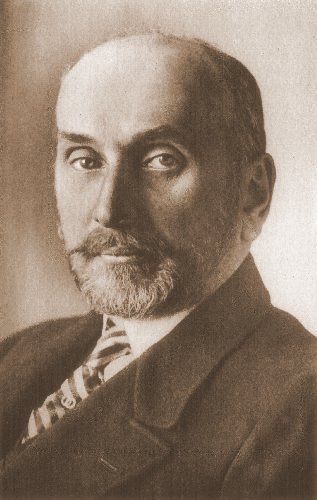
The order. The Tsar signed for general mobilization on 29 July, then called it off that night after the Kaiser’s telegram. Next afternoon Foreign Minister Sergey Sazonov pressed him for nearly an hour. “I will decide,” said the Tsar, and ordered it. Sazonov telephoned the general: “Now you can smash the telephone.”

1 Aug 1914
Time limits. Germany gave Russia twelve hours and France eighteen. At 7:10 p.m. on 1 August its ambassador declared war on Russia. On 3 August at 6:45 p.m. it declared war on France, citing French aviators over German soil. France had already called one such German report “pure invention.”

3 Aug 1914
Free passage. Germany’s way to France ran through Belgium. On 2 August it asked to cross, saying it had to “anticipate” an attack. Belgium said no. “Necessity knows no law,” Bethmann told the Reichstag on 4 August, as a Belgian envoy reported it. “For the wrong which we are thus doing, we will make reparation.”

4 Aug 1914
A scrap of paper. Britain wanted an answer on Belgium by midnight. That evening its ambassador called on the Chancellor, who spoke for about twenty minutes. To attack Germany now, he said, was “like striking a man from behind while he was fighting for his life against two assailants.”

3 Aug 1914
The lamps. On 3 August Grey told the Commons: “We are going to suffer, I am afraid, terribly in this war whether we are in it or whether we stand aside.” The line he is remembered for comes only from his memoir, eleven years later, and from a friend’s memory. Thirty-seven days after Sarajevo, the deadline ran out.

11 Nov 1918
Who counted. The soldiers’ dead are counted four ways, from 9,164,000 to 10,057,600. The civilian dead, wrote Antoine Prost, are “impossible to calculate with precision.” On the front line the Allies paid the highest price, he found. On the home front, the Central Powers and Russia paid more.

28 Jun 1919
The verdict. The treaty was signed five years to the day after Sarajevo. In Germany, no political camp accepted it as a verdict of guilt. The argument over who was to blame had only begun, and historians have given at least three answers.

1928
To blame? 1928. Much of the German and Austrian record in this story reaches us through Sidney Fay’s book. He was also a party to the argument. The war had many deep causes, he wrote, and he called for the treaty’s verdict to be revised.
1961
To blame? 1961. The German historian Fritz Fischer answered the other way. It was not a matter of everyone stumbling in, he argued: the leaders in Berlin knew the risk they were taking.

2012
To blame? 2012. The historian Christopher Clark called his book The Sleepwalkers. This story does not settle the question either. The telegrams are here, in the words of those who sent them.
Pictures, from Wikimedia Commons: Archduke Franz Ferdinand, Ferdinand Schmutzer, Public domain; Gavrilo Princip, Unknown authorUnknown author, Public domain; Young Bosnia, Unknown authorUnknown author, Public domain; Nikola Pašić, Unknown authorUnknown author, Public domain; Wilhelm II, Studio of Thomas Heinrich Voigt, Public domain; Leopold Berchtold, UnknownUnknown, CC BY-SA 3.0 de; Edward Grey, Bassano, Public domain; July Crisis, Map_Europe_alliances_1914-ru.svg: * historicair (French original) Fluteflute & Bibi Saint-, CC BY-SA 2.5; Gottlieb von Jagow, Bain, Public domain; Nicholas II, Boissonnas & Eggler, Public domain; Sergey Sazonov, Unknown / Inconnu, Public domain; Russia, Unknown, Public domain; German invasion of Belgium, Essen, Léon van der, Public domain; Edward Goschen, Bain News Service, publisher, Public domain; London, Ilya Grigorik, CC BY-SA 3.0; First World War, User:Hohum, Public domain; Treaty of Versailles, David Lloyd George, Woodrow Wilson and Georges Clemenceau, Public domain; Sidney B. Fay, Unknown authorUnknown author, Public domain; Christopher Clark, Lesekreis, CC0.
Something wrong or missing? Tell us, with a source, or edit this page.


